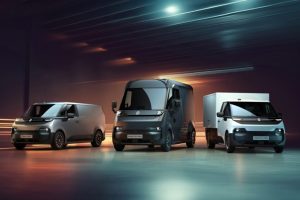
Renault unveiled its redesigned 2026 Trafic E-Tech at the Solutrans 2025 CV show, marking the first reveal of what will become a three-van electric lineup.
The new Trafic E-Tech represents Renault’s first commercial vehicle built on a platform designed specifically for electric power.
All three vans launching in 2026 will use this same foundation, covering different segments of the commercial vehicle market with advanced EV technology.
This marks Renault’s first software-defined vehicle, built on an 800-volt electrical system that delivers significant improvements in driving range and charging speed.
Range and Charging Capabilities
Business owners can choose between two battery options depending on their delivery routes. The larger NMC battery will provide up to 278 miles of range when the van launches.
A smaller LFP battery arriving later will deliver nearly 217 miles of range. Previous Trafic models managed only 186 miles per charge.
The 800-volt architecture enables charging from 15% to 80% capacity in just 20 minutes using ultra-rapid chargers.
Vehicle-to-load capability lets drivers power laptops, tools and other equipment directly from the van. Vehicle-to-grid technology allows the van to feed power back into the electrical grid when parked.
Performance and Capacity
A single rear-mounted motor produces 201 horsepower and 254 lb-ft of torque across all variants.
The setup enables a two-tonne towing capacity and up to 1.25-tonne payload – key specifications for commercial operators.
Renault’s skateboard chassis design optimizes cargo space while keeping the van’s height at 1.9 meters for standard parking garage clearance. The turning circle matches that of Renault’s Clio compact car.
The L1 body style measures 4.87 meters long with 5.1 cubic meters of cargo space.
L2 versions stretch to 5.27 meters and offer 5.8 cubic meters of load capacity.
Design and Interior Technology
The exterior features a cleaner design than the outgoing model, with short overhangs and large windows for better visibility.
Slim LED headlights connect via a light strip that runs beneath the windscreen and surrounds an illuminated Renault badge. The rear doors open wide, with black plastic protection wrapping around high-wear areas.
Inside, the dashboard borrows heavily from Renault’s passenger cars. A 12-inch touchscreen running Android Automotive angles toward the driver, with physical climate controls below.
A configurable 10-inch digital instrument cluster sits behind the steering wheel.
The navigation system accounts for the van’s size and cargo when planning routes, avoiding roads unsuitable for commercial vehicles. Companies can integrate their own delivery apps or specialized equipment controls directly into the screen.
Sustainability Focus
Renault aims to include over 23% recycled materials throughout the Trafic – matching levels achieved in its passenger cars.
More than 40 kilograms of recycled plastic appears throughout the van’s construction. The seat fabric contains 50% recycled materials.
Battery cells will be manufactured in Europe, with final assembly happening at Renault’s Sandouville plant where the van is built.
The Trafic E-Tech panel van goes on sale in mid-to-late 2026. Chassis cab, platform cab, tipper, flatbed and cargo box versions will follow shortly after launch.