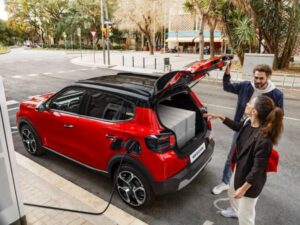
The Citroen e-Berlingo continues to dominate the electric compact van market, but faces growing pressure from newer rivals entering the segment. As part of Stellantis’ broader electrification strategy, the e-Berlingo shares its platform with badge-engineered siblings including the Fiat e-Doblo, Peugeot E-Partner, Vauxhall Combo Electric and Toyota Proace City Electric.
Recent updates focus on interior technology and driving refinements rather than dramatic overhauls.
The e-Berlingo remains the best-selling compact electric light commercial vehicle despite increased competition from the Ford E-Transit Courier and Renault Kangoo E-Tech. Its success stems from balancing familiar design with practical electric functionality.
Updated Technology and Interior Design
Visual changes are minimal compared to petrol and diesel variants. The boxy, compact design retains its utilitarian focus with Citroen’s double-chevron badge and LED lighting providing subtle electric model identification.
Interior improvements are more substantial.
A new 10-inch digital instrument cluster sits ahead of the driver, paired with a 10-inch infotainment screen featuring wireless Apple CarPlay and Android Auto connectivity. The upgraded system represents a significant improvement over previous clunky interfaces.
Passenger comfort varies significantly by configuration. The twin passenger bench in Enterprise Plus and Driver variants creates cramped conditions – particularly for the center passenger, who must navigate a large dashboard protrusion housing the drive selector. This design compromise reflects the cost of adapting the platform for electric use.
The entry-level Enterprise model offers better two-person comfort with a single passenger seat, though it sacrifices third-person capacity and the load-through panel.
Storage remains generous throughout the cabin. Deep door bins, overhead windscreen shelf, and large center console provide ample space for tools and personal items.
Build quality emphasizes durability over luxury – appropriate for commercial use but falling short of premium passenger car standards.
Electric Powertrain Performance
The familiar Stellantis electric setup combines a 52kWh battery with a 100kW (134bhp) motor driving the front wheels. This powertrain appears across multiple Stellantis compact vans and passenger cars.
Performance proves adequate rather than exciting. Instant torque delivery assists with fully-laden starts, while the compact dimensions and car-like driving position enhance urban maneuverability. The tight turning circle aids navigation in confined spaces.
Highway cruising is quiet and composed, though the unladen van exhibits some surface sensitivity on rougher roads.
WLTP range reaches 213 miles, though real-world conditions reduce this figure. Testing revealed consistent 3.5 miles per kWh efficiency in mixed driving, suggesting approximately 180 miles of usable range – sufficient for typical urban delivery routes.
Charging capabilities include 100kW DC rapid charging as standard, achieving 0-80% capacity in roughly 30 minutes. The 7.4kW onboard AC charger enables convenient overnight charging from home wallboxes.
Load Capacity and Practical Features
Electric conversion doesn’t significantly compromise cargo space. Two body lengths are available: the standard M version provides up to 1,817mm load length with 3.3m³ total volume, while the extended XL increases capacity to 4.4m³ with 2,167mm load length.
Maximum payload ranges from 691kg to 781kg – approximately 200kg less than diesel equivalents due to battery weight.
The folding passenger seat and load-through bulkhead accommodate longer items like piping or timber. Six tie-down hooks secure cargo during transport. Standard M models include nearside sliding doors, while XL variants feature twin sliding doors.
Despite its age, the e-Berlingo maintains competitive load volumes and payload capacity within the segment.
Pricing and Equipment Levels
Pricing starts just under £28,000 excluding VAT, reduced by £2,500 through the Plug-in Van Grant. This positions it competitively against the Ford E-Transit Courier and Stellantis-based rivals, though all electric vans carry premium pricing.
Three trim levels are offered: Enterprise, Enterprise Plus, and Driver. The upper two grades include the infotainment screen, enhanced safety equipment, and upgraded cabin technology – likely to prove most popular with fleet operators and individual buyers.
The entry-level Enterprise model lacks essential features including the infotainment screen (replaced by a phone clamp) and DAB radio capability, making it difficult to recommend despite cost savings.
All variants include a three-year, 100,000-mile warranty. Maintenance costs should prove lower than diesel alternatives due to fewer moving parts and reduced brake wear from regenerative braking.
Market Position Assessment
The Citroen e-Berlingo doesn’t pioneer new technology but successfully electrifies a proven commercial vehicle platform. It delivers practical range, reasonable payload capacity, and user-friendly operation within a familiar package that operators trust.
Competition is intensifying. The Ford E-Transit Courier offers a more modern platform and refined driving experience, while the Kangoo E-Tech provides innovative load space solutions.
However, the e-Berlingo maintains appeal for operators with reliable overnight charging access and predictable daily routes. Its combination of proven reliability, practical capability, and competitive pricing continues to resonate in the marketplace.
The van’s sustained sales leadership suggests that evolutionary improvement often trumps revolutionary change in the commercial vehicle sector – at least for now.
Citroen e-Berlingo Driver XL Specifications:
- Price: £31,005 plus VAT and OTR
- Powertrain: Front-motor, front-wheel-drive
- Battery: 52 kWh
- Power: 134 bhp
- Torque: 99 lb ft
- Top speed: 82 mph
- Range: 213 miles (WLTP)
- DC charging: Up to 100kW