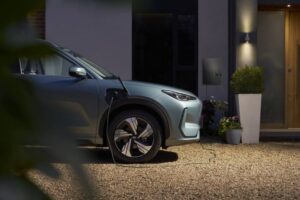
Energy Secretary Ed Miliband announced that EV owners without driveways will soon install cross-pavement charging gullies without planning permission. The Government will introduce permitted development rights for these charging solutions later this year as part of a new clean energy package.
The change means households without off-street parking can finally install at-home chargers and access cheaper domestic electricity tariffs. Currently, these drivers rely entirely on public charging networks.
Massive Cost Differences
The cost gap between home and public charging is huge. Home charger users enjoy overnight tariffs as low as 6.5p per kWh.
Kerbside EV chargers cost 54p/kWh on average while ultra-rapid en route devices cost 76p/kWh – that’s nearly ten times more expensive.
Lack of at-home charging for households without off-street parking has been a major barrier to EV adoption for years.
Current solutions create safety hazards. Cables trailing across pavements between homes and vehicles put pedestrians at risk. Cable gullies solve this by running cables underneath the pavement – but until now they’ve required lengthy council planning processes.
Removing the planning requirement makes the process quicker, simpler and cheaper for homeowners.
Industry Response
Vicky Edmonds, CEO of EVA England, called the decision a “clear step forward.”
“Plans to introduce permitted development rights for EV charging and cross-pavement solutions are a major breakthrough for the millions without driveways who currently face a two-tier system of higher costs and fewer options.”
She highlighted the current unfairness: “Around half of drivers without off-street parking say they are paying more to run an EV than their previous petrol or diesel car. Addressing this imbalance is critical to making the transition fair.”
Financial support varies by location. Some councils offer help for charging gullies via the LEVI fund, while other households must pay for installation themselves.
Michael Goulden, CEO of cross-pavement specialist Kerbo Charge, praised the announcement:
“Today’s commitment is exactly the kind of decisive action needed. With home charging five to ten times cheaper than public alternatives, this opens the door to genuinely affordable EV ownership for the millions of drivers who’ve been locked out simply because they don’t have a driveway.”
Wider Clean Energy Push
The charging gully announcement came within a broader package to “double down not back down” on moving away from fossil fuels. The timing connects to the current Iran conflict and its impact on energy security.
Other measures include making it easier for tenants and leaseholders to request home chargers, solar panels and heat pumps.
Miliband emphasized the geopolitical context: “As we face the second fossil fuel shock in less than five years, the lesson for our country is clear: The era of fossil fuel security is over, and the era of clean energy security must come of age.”
The Iran conflict has sparked renewed EV interest across Europe.
New EV sales jumped 51% across Europe in March compared to last year. In the UK, registrations were 24% higher this March than March 2025. Used EV interest has reached record levels simultaneously.
EV prices have dropped in recent months. A new electric car now costs less on average than a new petrol car, according to Autotrader data.
The cross-pavement charging changes should help more drivers take advantage of these improving EV economics – particularly those who’ve been priced out by expensive public charging networks.