HMRC confirmed Tuesday it’s appealing a tribunal ruling that could slash VAT on public electric car charging from 20% to 5% – a decision that’s sparked fury across the charging industry.
The landmark ruling came last month from Judge Harriet Morgan at a London First-Tier Tribunal. Not-for-profit operator Charge My Street brought the case against HMRC, arguing the current tax structure is unfair.
The tribunal agreed. It found that applying the standard 20% rate to public charging was a “strained construction” of the VAT Act.
Under current law, electricity counts as “always for domestic use” if a single customer doesn’t consume more than 1,000kWh per month at one location. That’s enough energy to recharge a Tesla Model Y 16 times.
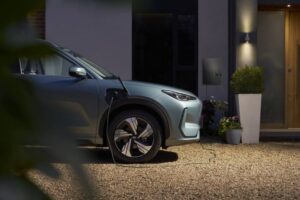
The ruling would’ve ended one of the biggest inequalities in electric motoring. Drivers who charge at home pay 5% VAT on electricity. But the estimated 40% of UK households without driveways get hit with 20% VAT at public chargers – four times more for identical electricity.
“We’re appealing this case, as our position is that standard rate VAT applies to electricity supplied through public EV charging infrastructure,” an HMRC spokesperson said Tuesday.
The Money Behind the Decision
The Treasury’s reluctance isn’t surprising given what’s at stake financially.
Charger mapping firm Zapmap calculates the VAT difference generates around £85 million yearly for the government. That figure’s projected to hit £315 million by 2030 and climb into the billions as more drivers switch to electric cars.
With mounting fiscal pressure and calls to scrap planned fuel duty increases, ministers clearly don’t want to give up a growing revenue stream. Especially as they’re simultaneously preparing pay-per-mile taxation on electric vehicles.
Accountancy firm Deloitte uncovered the discrepancy and took Charge My Street’s case for free. According to Deloitte tax partner Daniel Barlow, three days of tribunal arguments focused on precise meanings of words like “a month” and “premises.”
Will Maden, a director at Charge My Street, warned the appeal could stall Britain’s EV transition.
“About 40% of the UK population, they don’t have drives. Transitioning to EVs is a huge problem. Adding 20% makes a huge difference. My personal view is I think we should be making the transition to EVs as cheap as we can. This is an environmental issue.”
Although the ruling technically applies only to Charge My Street, operators across the sector are reportedly ready to file their own claims for overpaid VAT going back years if the appeal fails.
Industry Backlash
Industry reaction has been harsh.
John Lewis, chief executive of char.gy, called HMRC’s move “a deeply disappointing decision, and one that sends entirely the wrong signal to the millions of people who rely on public charging.”
He pledged his company would immediately pass on any VAT cut to customers.
“The government talks about accelerating EV adoption, yet is actively choosing to maintain a tax structure that makes public charging more expensive than it needs to be and undermines the transition. The question is: what is the government waiting for?”
Tanya Sinclair, chief executive of Electric Vehicles UK, accused ministers of defending inequality.
“Drivers without off-street parking already pay more to charge simply because of where they live. HMRC appealing this ruling is the government choosing to defend that inequality. If you’re serious about EV adoption, you don’t fight the ruling that would fix your most regressive charging cost. You let it stand. Their actions don’t match the narrative.”
Ginny Buckley, chief executive of Electrifying.com, pointed out the disparity can make EVs more expensive to run than petrol cars for some drivers.
“For a government that talks about standing up for ‘working people’, the decision to appeal this ruling flies in the face of that. Those drivers can pay up to ten times more to charge an electric car than someone with a driveway – and in some cases, that makes EVs more expensive to run than petrol. If the government is serious about making EVs affordable, it cannot allow a two-tier system where access to cheaper, cleaner driving depends on what type of property you have.”
Warren Philips, campaign lead at FairCharge, offered perhaps the sharpest criticism. His organization has long campaigned against the VAT disparity.
“Charging people more because they depend on public infrastructure was wrong in principle, and the tribunal confirmed it. People unable to charge at home pay four times the VAT rate of their neighbours for identical electricity, a failing that persisted long after the legal basis was challenged. By appealing, the government is telling 1.4 million current EV drivers, and more than 30 million who will have to switch, that it is willing to go to court to keep public charging costs high. It should accept the ruling and work with consumers and industry to put this right.”
With the Upper Tribunal appeal now moving forward, millions of British drivers who rely on public charging face continued 20% VAT bills while waiting for a final resolution on whether they’ve been overcharged for years.