BMW claims the 2026 iX3 marks the “start of a new era” for the brand. It’s not just marketing talk this time.
The company says this replacement represents such a departure from the previous generation that it’ll “give the impression an entire vehicle generation has been skipped.” That’s because the iX3 serves as the first Neue Klasse model – setting the template for every future BMW.
The new iX3 brings BMW’s cutting-edge powertrain systems and onboard tech to the SUV segment.
It’s arriving alongside significant models from key rivals like the Mercedes GLC and Volvo EX60. The question is whether it can live up to BMW’s bold claims.
Design and Interior Changes
BMW’s design team has faced criticism in recent years for some polarizing creations. With the 2026 iX3, they’ve aimed for a calmer direction while honoring classic designs.
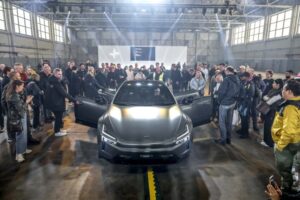
The most noticeable change is the Neue Klasse “face” featuring a slim upright kidney grille – a nod to the original Neue Klass cars from the 1960s. Sharp tapered lighting units with thin strips and adaptive LED elements flank the grille. The front end feels upright but angular.
The result looks neater than the current X3’s design while maintaining BMW’s identity.
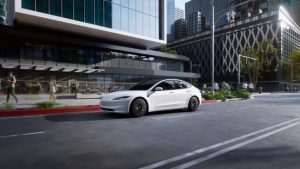
Behind that face sits a cleaner design where simple lines define the shape. This 4.7-meter long, 1.9-meter wide SUV maintains traditional proportions but doesn’t look as bulky as before.
Inside, BMW has toned things down. The two-tier center console flows into a simple dash finished in appealing fabric that conceals ambient lighting.
Physical controls appear where you’d expect them. High-quality finishes throughout use recycled materials. The steering wheel varies between trim levels but feels distinctive across all versions.
Passenger space is generous – four six-footers can fit comfortably with room to spare. The boot offers 520 liters of storage plus a 58-liter frunk.
Advanced Technology Systems
The iX3 showcases BMW’s new Panoramic Vision – a display projected between the dash and windscreen that runs the car’s full width, replacing traditional instruments.
Combined with the touchscreen and augmented reality head-up display, it delivers extensive information without feeling overwhelming when properly configured.
The system’s highly customizable – you can display everything from time and temperature to energy efficiency in five individual slots. Focus modes for navigation or trip computer help reduce clutter.
The 17.9-inch central screen houses extensive menus, but BMW designed it for actual drivers. Temperature controls and drive modes have permanent shortcuts on the main screen. ADAS controls sit on the screen’s edge within easy reach of the steering wheel.
The tech feels developed to enhance the driving experience rather than frustrate users.
New Powertrain and Performance
Under the bodywork, the iX3 features BMW’s sixth-generation eDrive systems developed for the new platform.
The 800V architecture brings improvements in energy density, efficiency, range, power and charging speeds. Everything from drive motors to individual battery cells has been redesigned for better packaging and cooling.
The 108.7kWh battery pairs exclusively with a two-motor all-wheel-drive setup that divides power for maximum efficiency and grip.
Combined output reaches 463bhp and 476lb ft – enough for 0-62mph in just 4.9 seconds. The expertly balanced throttle delivers brilliant responsiveness at any speed.
BMW says the new drive technology reduces weight by 10% and energy losses by 40% compared to the previous iX3. Official efficiency reaches 4.1m/kWh, making this the first car in the UK to achieve 500 miles of WLTP range.
Real-world testing showed 440 miles of promised range initially. After several hours of unsympathetic driving, efficiency measured 3.3m/kWh – theoretically around 360 miles without considering regenerative braking gains.
BMW’s new regenerative system handles 90% of deceleration while adding energy back to the battery. This makes 400 miles easily achievable while maintaining natural brake feel.
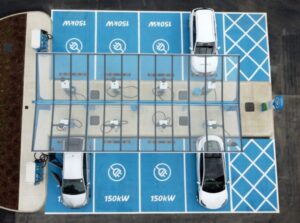
The 800V architecture enables 400kW peak DC charging – allowing 10-80% charge in 21 minutes or adding 231 miles of range in 10 minutes with compatible chargers.
Driving Experience
BMW tuned the iX3 to deliver traditional driving dynamics. You won’t mistake this 2.3-tonne SUV for a lightweight sports car, but it provides the positive feel expected from BMW.
Steering offers satisfying weight and directness. On twisty roads, the iX3 feels smaller than its actual size. Sport mode doesn’t transform the character dramatically, but regular settings provide enough engagement.
Highway cruising proves effortless for extended distances.
The main weakness is ride quality. The suspension feels overly stiff – perhaps to retain sportiness, but it delivers jarring impacts over rough roads. Excellent body control comes at the cost of comfort. The passive damping system means you’re stuck with this firmness.
Our test car ran optional 22-inch wheels – the standard 20-inch setup might reduce some harshness.
Pricing and Specifications
BMW keeps the iX3 range simple initially. One powertrain – the 50 xDrive – across three trim levels.
The entry iX3 50 xDrive starts at £57,750 – matching the plug-in hybrid X3 price, giving buyers an easy ICE-to-EV transition without cost penalties.
Standard equipment includes 20-inch wheels, heated front seats, dual-zone climate, wireless smartphone mirroring, adaptive cruise control and remote parking assistance.
M Sport trim costs £60,250, while M Sport Pro reaches £61,750. Both add cosmetic upgrades, with M Sport Pro including adaptive LED lights, illuminated grille, and bespoke seats and steering wheel.
Final Assessment
Does the BMW iX3 justify the brand’s bold claims? For the most part, yes.
It may not be as paradigm-shifting as BMW suggests, but it sets new benchmarks and delivers on key promises.
The electric powertrain addresses common EV concerns. Quick performance, comfortable 400+ mile range and rapid charging work for school runs, commutes and long trips.
While the technology feels extensive, it’s designed to help rather than confuse drivers. The interior provides space, comfort and refinement. The design points toward a calmer BMW vision.
If this represents BMW’s starting point for the next EV generation, the future looks promising.
- Price: £61,650 (£72,162 as tested)
- Powertrain: Two-motor, all-wheel-drive
- Battery: 108.7kWh
- Power: 463bhp
- Torque: 476lb ft
- Top speed: 130mph
- 0-62mph: 4.9 seconds
- Range: 449 miles
- Consumption: 3.68m/kWh
- Charging: up to 400kW
Alternatives to Consider
- Mercedes GLC – Similar pricing, range and charging capabilities. Interior design comes down to personal preference
- Genesis GV70 – More luxurious interior and superior ride comfort, but range and charging can’t match the iX3
- Audi Q6 – Direct competitor hampered by busy styling and questionable interior quality