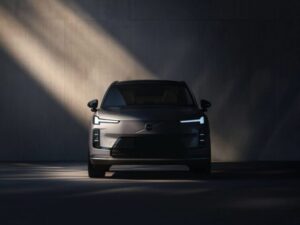
Lexus has discontinued the UX 300e compact SUV after five years in the UK market, according to company officials. The vehicle was the Japanese luxury brand’s first electric model.
EV Powered discovered the car’s removal from the Lexus UK website and contacted the manufacturer for confirmation.
“It is withdrawn from sale, that is the basic confirmation,” a Lexus spokesperson said.
Sales figures tell the story. Lexus sold just 3,400 UX 300e units since 2021 – numbers that likely contributed to the decision.
The UX 300e shared its platform with the hybrid UX300h but struggled with limited specifications. The compact SUV featured a 54.3kWh battery delivering only 186 miles of WLTP range.
Technical limitations hurt market appeal from the start. The 2020 launch included an already-outdated CHAdeMO charging port with maximum speeds of 50kW – significantly slower than competitors.
Even a mid-life refresh in 2024 couldn’t salvage sales performance.
Current Lexus EV Lineup
The RZ SUV now stands as Lexus’s sole electric offering in the UK. While it hasn’t matched the popularity of Tesla Model Y or Polestar 4 in the mid-size SUV segment, the RZ delivers more competitive specs – up to 346 miles of range and 150kW charging speeds.
Lexus plans to expand its electric portfolio within months.
The all-new ES sedan will arrive as the brand’s second EV option. For the first time in 37 years, the ES will be fully electric with two variants available.
The ES 500e offers 338bhp with all-wheel drive, while the ES 350e provides 221bhp through front-wheel drive. Both versions use a 77kWh battery pack.
Range varies between the models – the less powerful ES 350e achieves 300 miles per charge, while the performance-focused ES 500e manages 250 miles.
Industry sources suggest Lexus may revive the IS sedan as an electric-only model by 2027, though the company hasn’t confirmed these plans.
The UX 300e’s discontinuation reflects broader challenges facing Toyota and Lexus in EV adoption – both brands have moved slower than expected into full electrification compared to European and American competitors.