Nissan has privately warned it could shut its Sunderland factory if the UK gets excluded from new European rules designed to boost EV manufacturing, according to reports.
The Japanese automaker told officials the plant faces an “existential threat” if it’s frozen out of EU incentives under the proposed Industrial Accelerator Act, the Financial Times reported.
The new Made in Europe rules aim to protect EU manufacturers from cheap Chinese competition. They’ll offer state support and subsidies for EVs sold to corporate fleets – but only if they’re built in Europe using at least 70% European-made parts.
The rules also include “super credits” for CO2 trading on small electric cars manufactured within the EU.
That would exclude vehicles built at Sunderland and threaten the site’s future since most of its output goes to European markets.
Trade Deal Concerns
Mike Hawes, chairman of the Society of Motor Manufacturers and Traders, said the plan would “put UK manufacturers at a systematic disadvantage in the market.” He claimed it could breach the post-Brexit EU-UK trade deal.
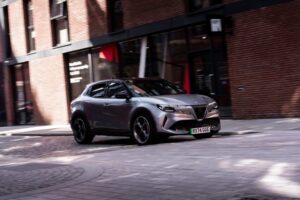
The Sunderland plant currently builds the hybrid Qashqai and the all-new Nissan Leaf. It’s set to produce the new all-electric Juke starting next year.
Around 6,000 people work directly at the facility, with an estimated 30,000 additional jobs in its supply chain.
The EU has left room for UK-built cars to qualify for some incentives. But different vehicle classes have different rules, which Nissan said creates confusion.
Nissan, which reported a £3.8 billion loss last year, welcomed some changes but wants consistency across all EV support programs.
“We’re pleased the Commission has addressed industry concerns and recognised how important partners are to the EU supply chain, by allowing ‘content equivalent to Union origin’ to count under the Act,” the company said.
The automaker noted this change should let vehicles built in partner locations – which often include many EU-made parts – qualify for government purchasing and national EV incentives.
Complex Rules Create Problems
But Nissan said using different definitions for corporate fleets and small car super credits “creates confusion and adds unnecessary complexity for the industry.”
The company wants the EU to apply ‘equivalent to Union origin’ rules across all types of EV support.
A European Commission spokesperson told the Guardian that public support for corporate vehicles will stay limited to EU-built cars. The spokesperson confirmed the Industrial Accelerator Act opens to the UK for public procurement and support schemes for electric vehicles.
However, the greening corporate vehicles proposal limits financial support for corporate cars and vans to zero or low-emission vehicles made in the EU.
Hawes said the UK automotive sector is “gravely concerned” by the Made in Europe proposals. As drafted, they would discriminate against UK-made vehicles and components, potentially damaging a trading relationship worth almost £70 billion annually.
The Sunderland plant represents one of the UK’s largest automotive manufacturing sites and a key part of Nissan’s global production network.