Polestar dropped its new flagship last month – an 871bhp Polestar 5 grand tourer that proves the Swedish brand isn’t just making sporty Volvos anymore.
But the writing’s been on the wall for a while. The Polestar 4 makes that crystal clear.
While the Polestar 3 shares DNA with Volvo’s EX90, the 4 stands completely on its own. It’s built on a different platform and targets performance drivers who want something sportier than traditional luxury SUVs.
This performance SUV-coupe competes against everything from the Porsche Macan Electric and Tesla Model Y to the Audi Q6 e-tron, Kia EV6 GT, and BYD Sealion 7.
Sleek Design That Actually Works
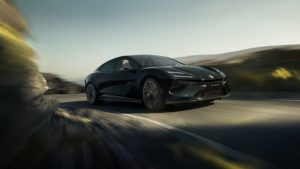
Most SUV-coupes end up looking like bloated mistakes – think BMW X6 or Mercedes GLE Coupe. Polestar’s designers nailed it. The 4 looks more like a sporty sedan than a fastback on stilts.
The proportions hide this car’s size really well. Everything flows from the angled hood and slim two-section lights to the sloping rear deck and full-width taillight.
Everyone talks about the missing rear window, but it’s not a big deal. The digital rearview mirror messes with depth perception – you can’t rely on it for parking. That’s what the backup camera handles. For normal driving, the screen works fine for tracking traffic behind you.
Polestar ditched the rear window to create that swoopy roofline without cramping rear passengers. Mission accomplished.
The back seat’s surprisingly spacious and comfortable. There’s plenty of headroom even with a tall driver up front. Rear passengers get their own climate zone and heated reclining seats. It’s a bit dark back there, but not claustrophobic.
Up front, there’s tons of space and clean Scandinavian design. Minimal clutter, sharp lines, and premium materials – including sustainably sourced leather – that justify the price tag. Chrome accents lighten things up, though the cream interior option looks better than the black test car.
That calming atmosphere lasts until you touch the 15.4-inch touchscreen.
Everything runs through this screen – wing mirrors, suspension settings, glovebox, trunk opening. Polestar might be Swedish, but its Chinese ownership shows here. Technology trumps intuitive use every time.
The screen’s sharp and responsive but poorly organized. The map permanently hogs half the home screen space. There are shortcuts for media, phone, and “ambience” – plus six customizable shortcuts that don’t include suspension or steering adjustments you’d actually want while driving.
Those controls hide in secondary menus that are nearly impossible to navigate safely. Some steering wheel buttons work as shortcuts, but they’re unmarked and change function depending on which menu you’re in.
It’s like designing your dream Scandinavian home then letting your dog mess in the entrance hall.
Performance That Delivers
Once you’re moving, the screen frustrations fade. The Polestar 4 backs up the brand’s premium performance ambitions.
The long-range dual-motor version packs a 94kWh battery and two motors delivering all-wheel drive plus 536bhp and 506 lb-ft of torque.
This refined five-seater hits 0-62mph in just 3.7 seconds and provides endless torque for immediate acceleration at any speed.
The Polestar 4 feels muscular and responsive with smooth power delivery controlled by a well-tuned throttle. Range mode dulls the throttle slightly without killing performance entirely.
You can add a Performance pack with sportier chassis tuning, Brembo brakes, and cosmetic upgrades. Even in standard form, the 4 matches its power with engaging dynamics.
It’s not a sports car, but it’s definitely sporty. Standard steering feels light, but firm mode helps. It’s accurate and communicative enough to let you push the car and enjoy it.
You always feel the weight, but it corners with confidence.
The air suspension offers three settings. Even firm mode stays fairly pliant and absorbent. You won’t get jarred, but nimble mode works best on rough UK roads.
Like the steering and throttle, suspension changes are subtle. Most owners will find their preferred combination and stick with it – which is good since adjusting anything through that screen while driving is a pain.
The 94kWh battery should deliver 367 miles according to official testing. Efficiency ranges from 2.87m/kWh to 3.34m/kWh. The test car’s long-term average hit just over 3.1m/kWh, with the trip computer estimating just under 300 miles with spirited driving.
That’s respectable, backed by 200kW peak DC charging for 10-80% top-ups in 30 minutes.
Pricing and Equipment
The Polestar 4 range starts at £55,000 for the long-range single-motor model. That gets the same 94kWh battery but drops the front motor, leaving you with 268bhp.
The dual-motor version tested here starts at £67,000. The only differences are that extra motor and the £5,000 Plus pack included as standard.
All Polestar 4s come well-equipped:
- 20-inch alloy wheels
- LED lights
- Powered tailgate
- Flush door handles
- Heated front seats
- Dual-zone climate control
- Digital instruments and head-up display
- 15.4-inch Android Automotive touchscreen
- Heat pump
- 360-degree parking cameras
- Adaptive cruise control and lane-keeping assist
Bridge of Weir leather upholstery costs £3,100 over the standard vegan Bio-Tech material.
The Plus pack adds rear climate control and heated seats, adaptive LED headlights, 12-speaker Harman Kardon audio, and 22kW AC charging. There’s also a Pilot pack with advanced driver assistance and a Pro pack with bigger wheels and cosmetic upgrades.
Almost Great
The Polestar 4 excels in virtually every area.
It looks fantastic, drives brilliantly, and offers comfort and refinement with strong range and charging speeds. But that overly complicated interface makes simple operations frustrating.
You’ll eventually adapt to its quirks as an owner, but “getting used to it” isn’t good enough – especially considering everything else this car does right.
Polestar 4 Long Range Dual Motor Specifications
- Price: £67,000 (£71,500 as tested)
- Powertrain: Dual-motor, all-wheel-drive
- Battery: 94kWh
- Power: 536bhp
- Torque: 506 lb-ft
- Top Speed: 124mph
- 0-62mph: 3.7 seconds
- Range: 367 miles
- Efficiency: 2.87m/kWh-3.34m/kWh
- Charging: Up to 200kW