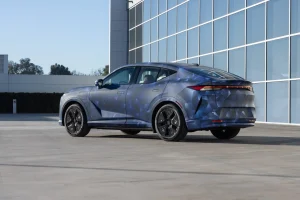
MG will launch its MG4 with semi-solid-state battery technology in Europe by the end of 2026, according to company officials. The automaker hasn’t provided an exact release date.
The Chinese market version of the MG4 Urban uses a 54kWh manganese-based lithium-ion battery with semi-solid-state technology. This setup delivers 328 miles of range under China’s CLTC testing cycle.
European drivers can expect around 280 miles of range – the CLTC cycle typically shows 15%-20% more range than Europe’s WLTP standard.
That’s still competitive for a car targeting the Renault 5, Citroen e-C3, and Hyundai Inster.
Faster Charging Times
The semi-solid-state battery offers about 20 miles more range than the current MG4 Urban. MG says the Chinese version charges from 30%-80% in 21 minutes – seven minutes faster than the standard lithium-ion model.
The company hasn’t announced peak fast-charging speeds yet.
MG expects the semi-solid-state MG4 to cost more than the current model when it launches. The existing car starts at £24,495.
Technology Expansion Plans
MG plans to add semi-solid-state batteries to other electric models after the MG4 launch. This includes the 4X, which the company revealed online earlier this month.
The technology offers better performance in cold weather – charging speeds are 15% faster when temperatures drop. MG’s system also works across a wider range of operating temperatures than current batteries.
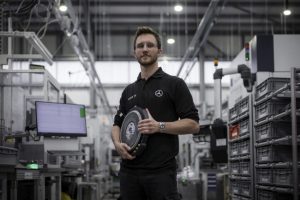
Mercedes tested solid-state battery technology in an EQS last year with more range than MG’s first-generation semi-solid-state batteries. But MG’s approach focuses on practical benefits like cold-weather performance.
Current solid-state and semi-solid-state batteries from MG have similar energy density to traditional lithium-ion packs. The technology promises higher energy density rates in future generations – this could mean longer range or lighter, cheaper battery packs for the same range.
Industry Competition
MG and Mercedes aren’t alone in pursuing this battery technology. Toyota has been exploring solid-state benefits for years. The Volkswagen Group aims to have solid-state batteries ready for production by 2030.
The race to commercialize solid-state technology reflects its potential to solve current EV challenges – faster charging, better cold-weather performance, and eventually lighter batteries with more range.